Five Years of Deprivation: Girls’ Education Ban in Afghanistan and the International Community’s Responsibility
28 Mar 2026
Five years after the Taliban banned girls from attending school beyond grade six, Afghanistan remains the only country in the world where girls are systematically excluded from education.
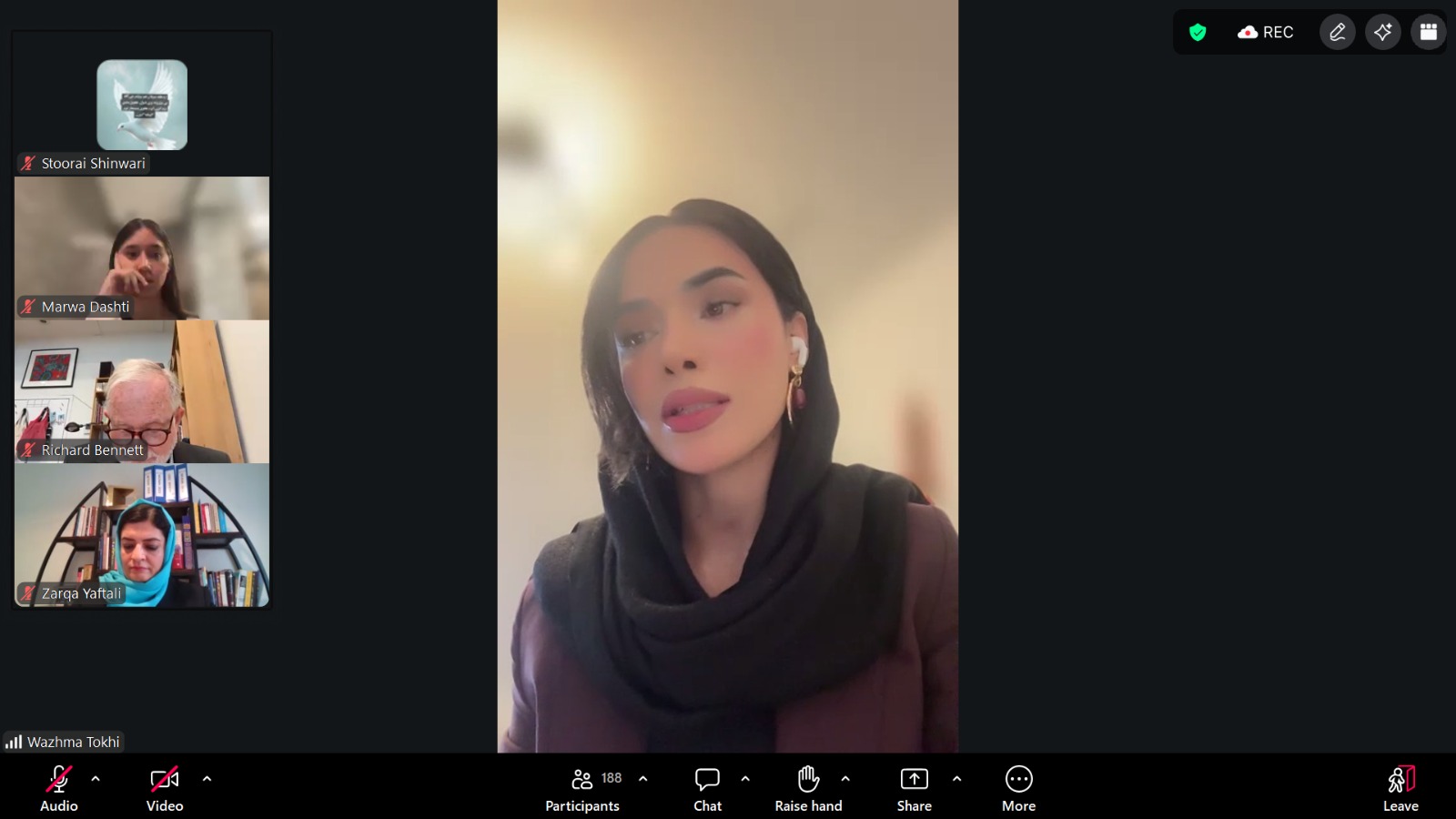
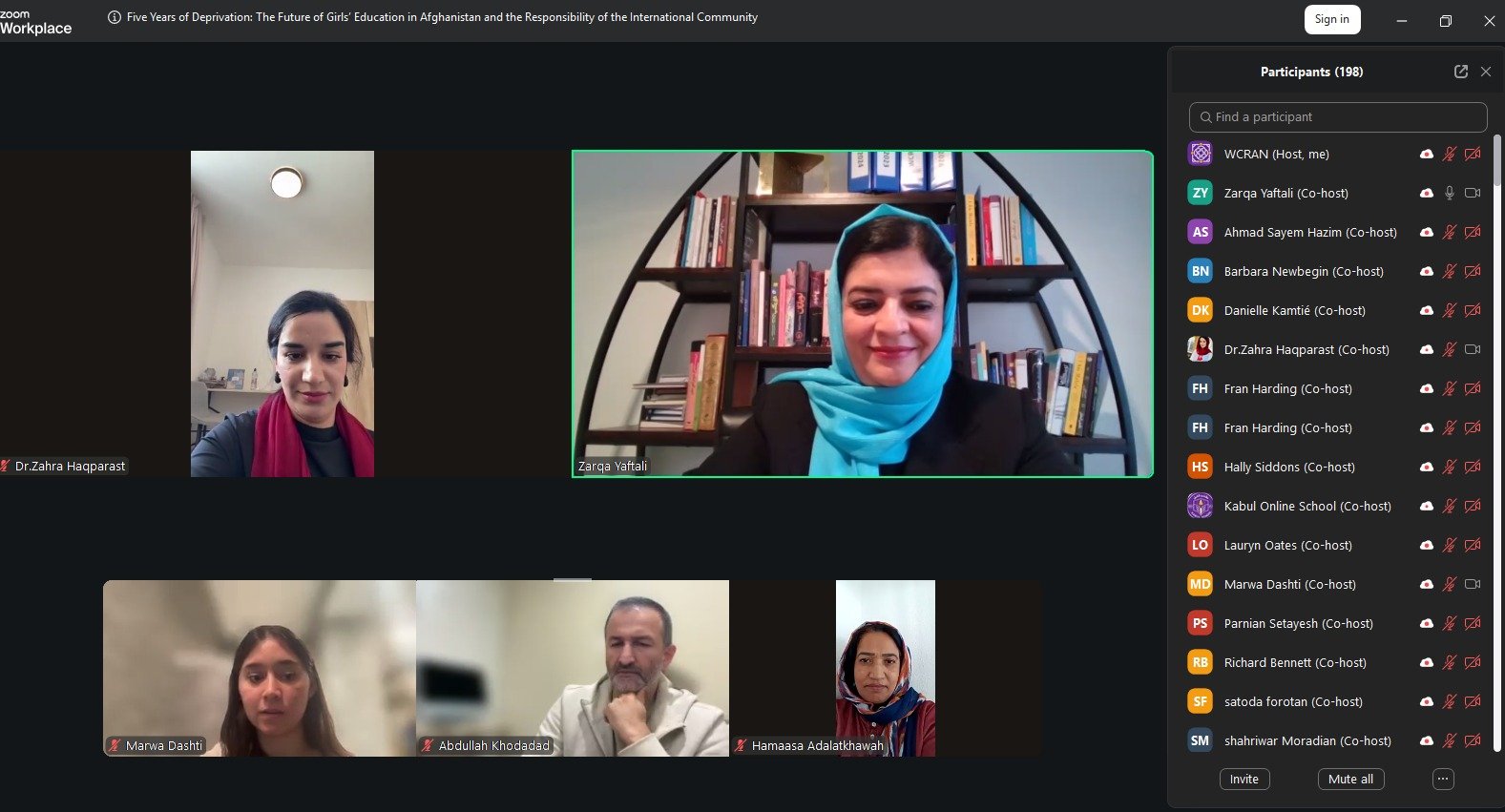
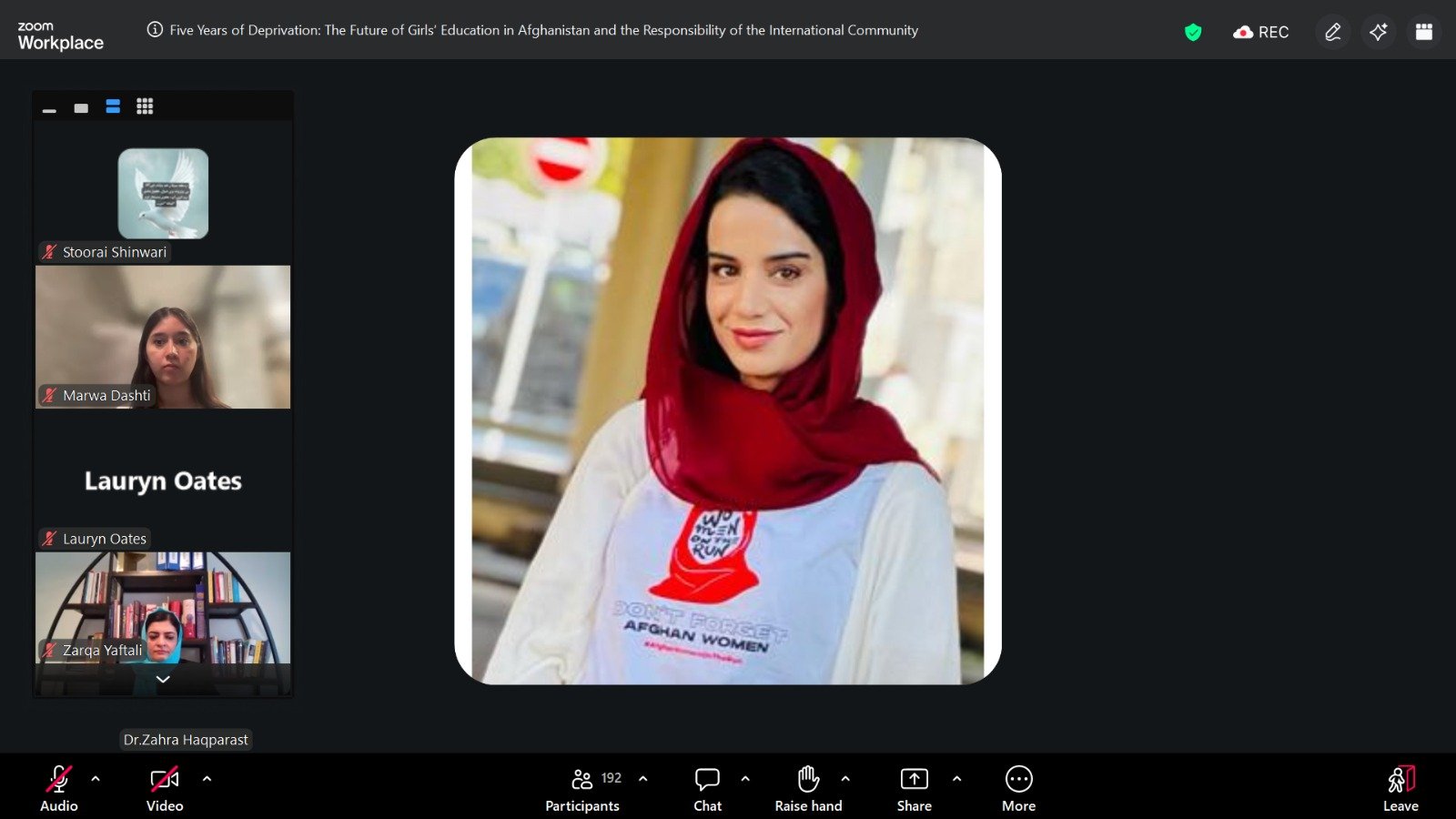
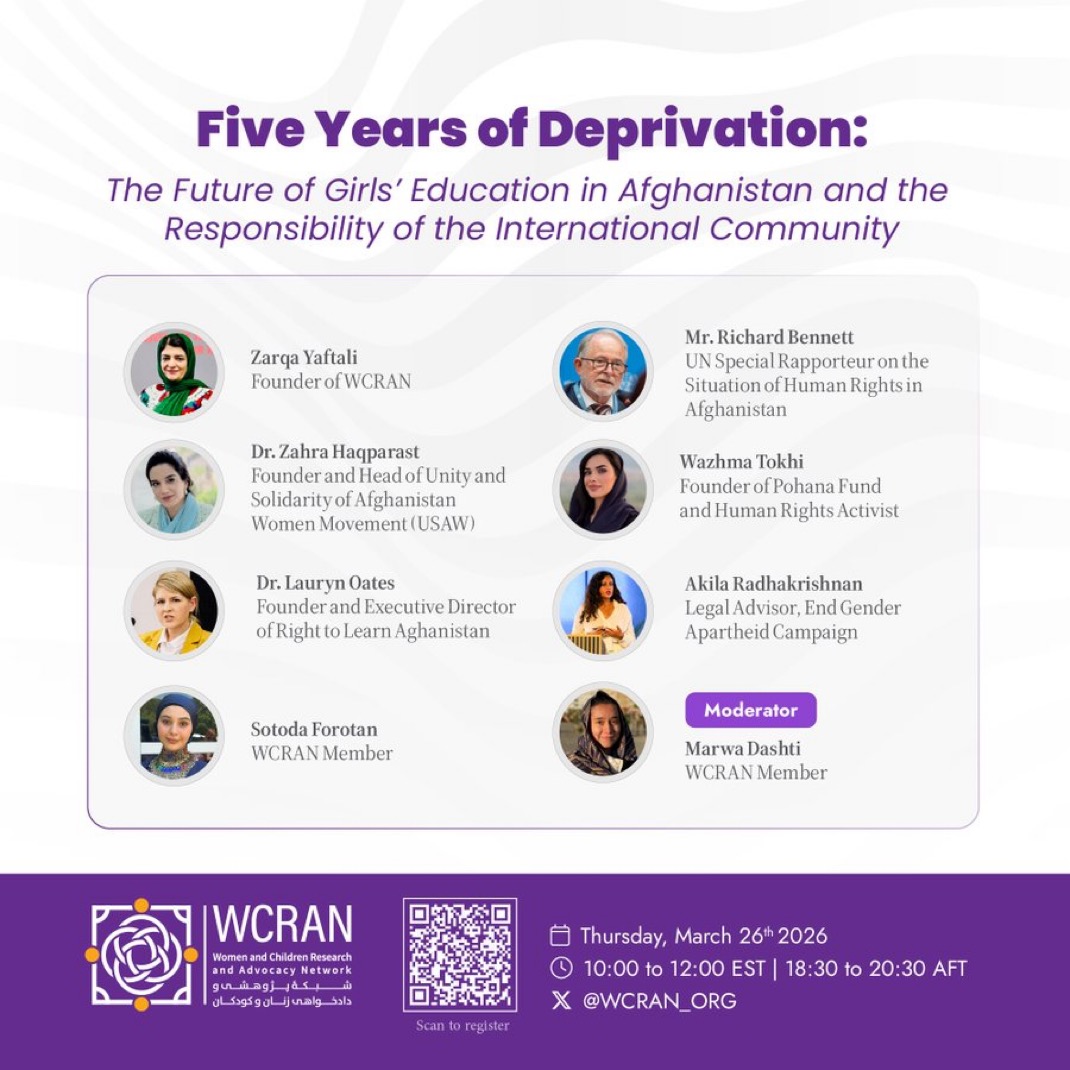
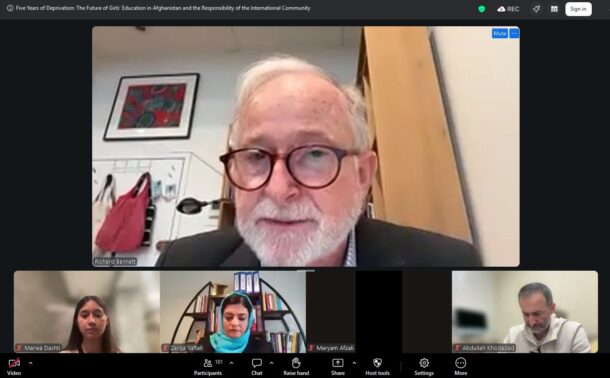
On March 26, 2026, the Women and Children Research and Advocacy Network (WCRAN) convened a powerful webinar titled “Five Years of Deprivation: The Future of Girls’ Education in Afghanistan and the Responsibility of the International Community.” The event brought together United Nations representatives, human rights experts, legal advisors, activists, and-most importantly-schoolgirls from Afghanistan themselves to present an open letter to the international community and demand urgent, coordinated action.
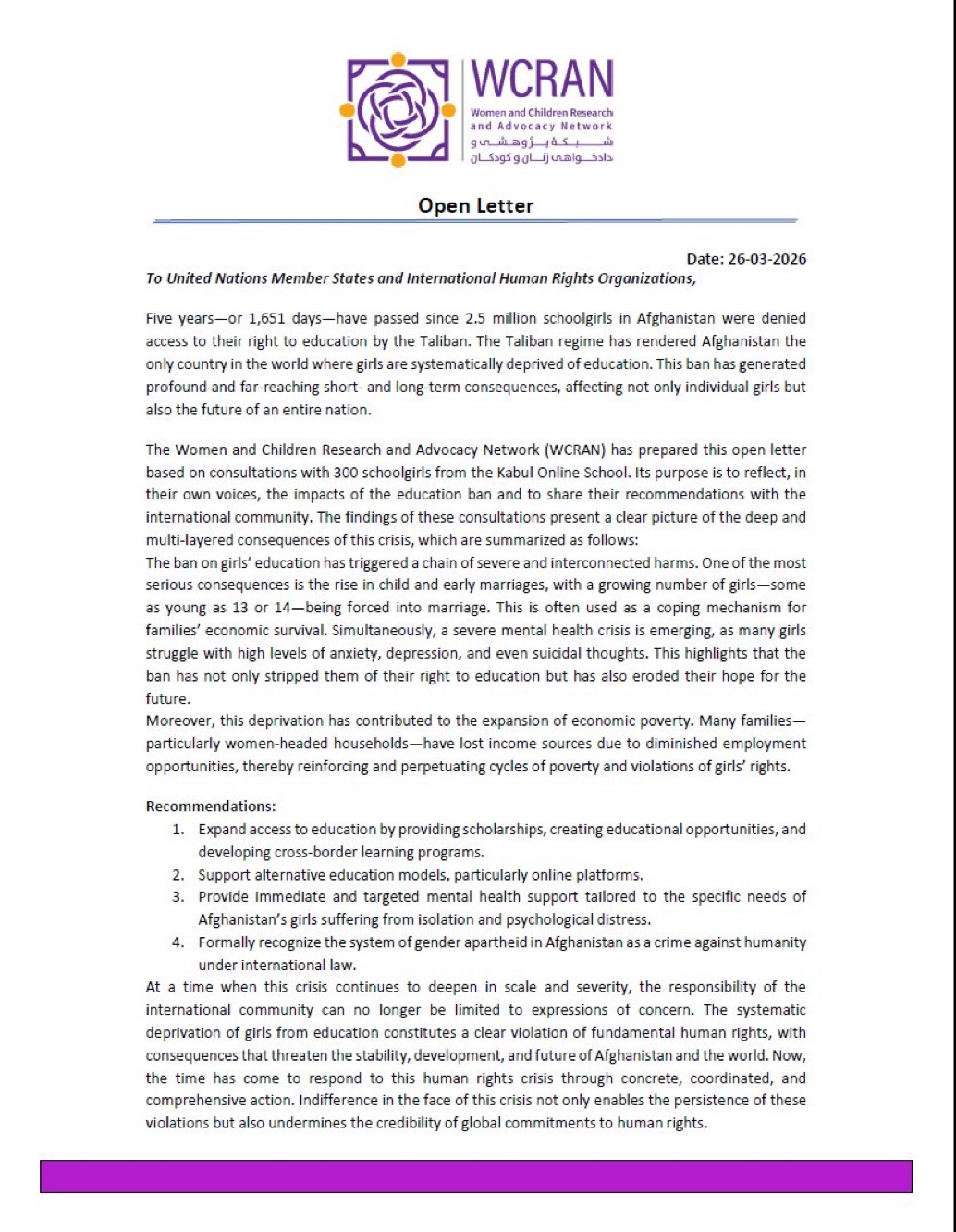
The Open Letter: Voices of 300 Schoolgirls
The centerpiece of the webinar was an open letter prepared by WCRAN based on consultations with 300 schoolgirls from the Kabul Online School. Sotoda Frotan, who presented the letter, highlighted that over 2.5 million girls in Afghanistan have been denied their right to education, with devastating consequences:
- A sharp rise in child and early marriage, with girls as young as 13 or 14 being forced into marriage as families cope with economic hardship.
- A growing mental health crisis, including high levels of anxiety, depression, and suicidal thoughts among girls who have lost not only their education but also their hope for the future.
- Deepening poverty, especially in women‑headed households, due to restrictions on employment and income opportunities.
The letter includes concrete recommendations for the international community, including expanding access to education through scholarships and cross‑border learning, supporting alternative education models (particularly online platforms), providing immediate mental health support, and formally recognizing gender apartheid in Afghanistan as a crime against humanity.
A System of Gender Apartheid
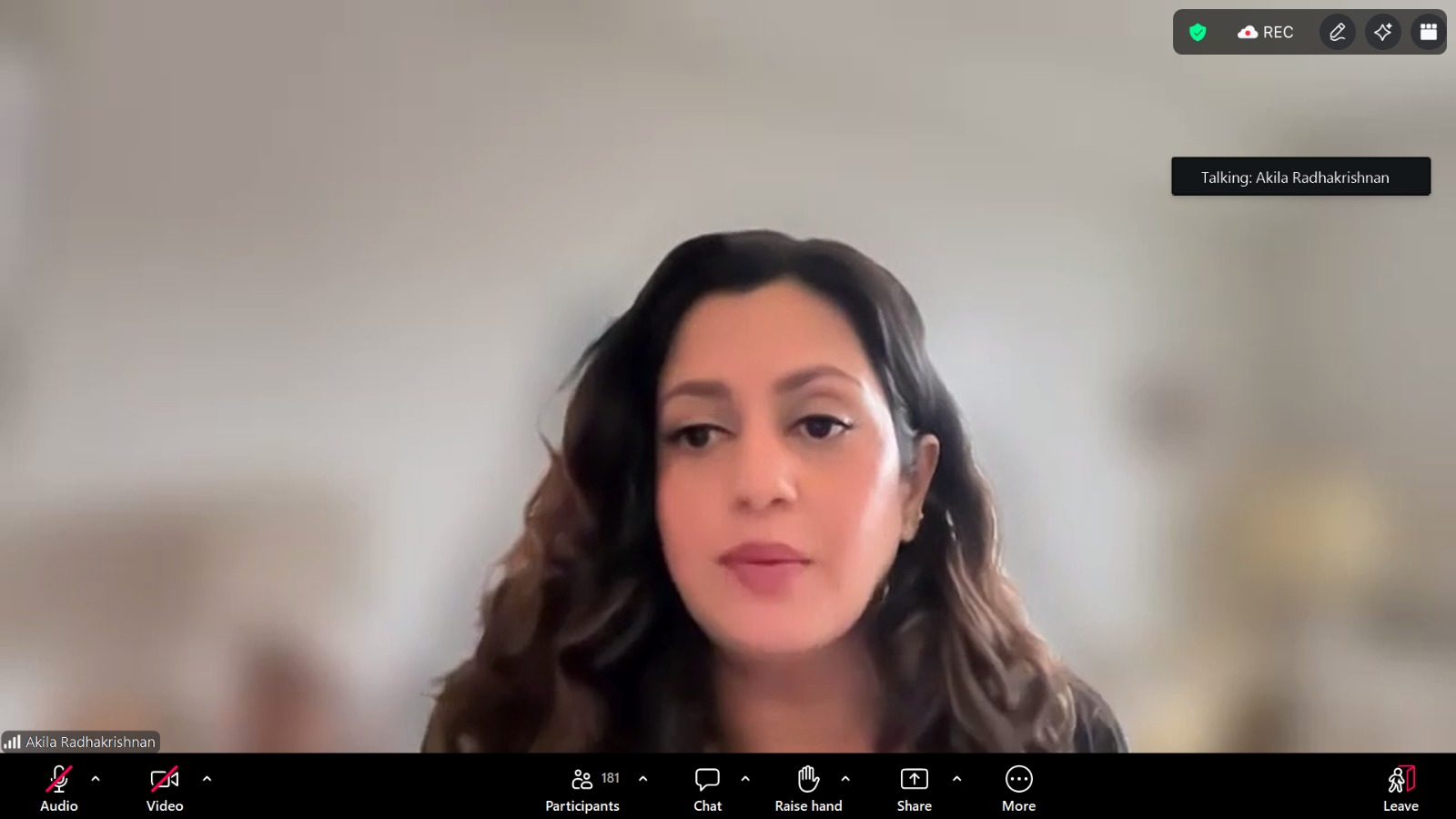
Akila Radhakrishnan, legal advisor and gender apartheid campaigner, explained that the denial of education is central to the Taliban’s system of gender apartheid-a “totalizing system designed to erase women from society.” She emphasized that since August 2021, the Taliban has issued over 200 edicts, policies, and restrictions targeting women, girls, and LGBTQ individuals, depriving them of education, employment, healthcare, freedom of movement, and expression.
“Education is essential not only for learning, hope, and future opportunities, but also as a safeguard against other rights violations,” Radhakrishnan said. “Denying education increases the risks of child marriage, early and forced pregnancy, poverty, isolation, and fear, and often leads to domestic and sexual violence, as well as limited access to healthcare.”
She called on the international community to codify gender apartheid as a crime against humanity in the ongoing negotiations for the Convention on the Prevention and Punishment of Crimes Against Humanity. States have until April 30 of this year to formally propose its inclusion. She noted that twelve states have already expressed support for codification, and many others have used the term in political contexts.
UN Special Rapporteur: Crimes Against Humanity
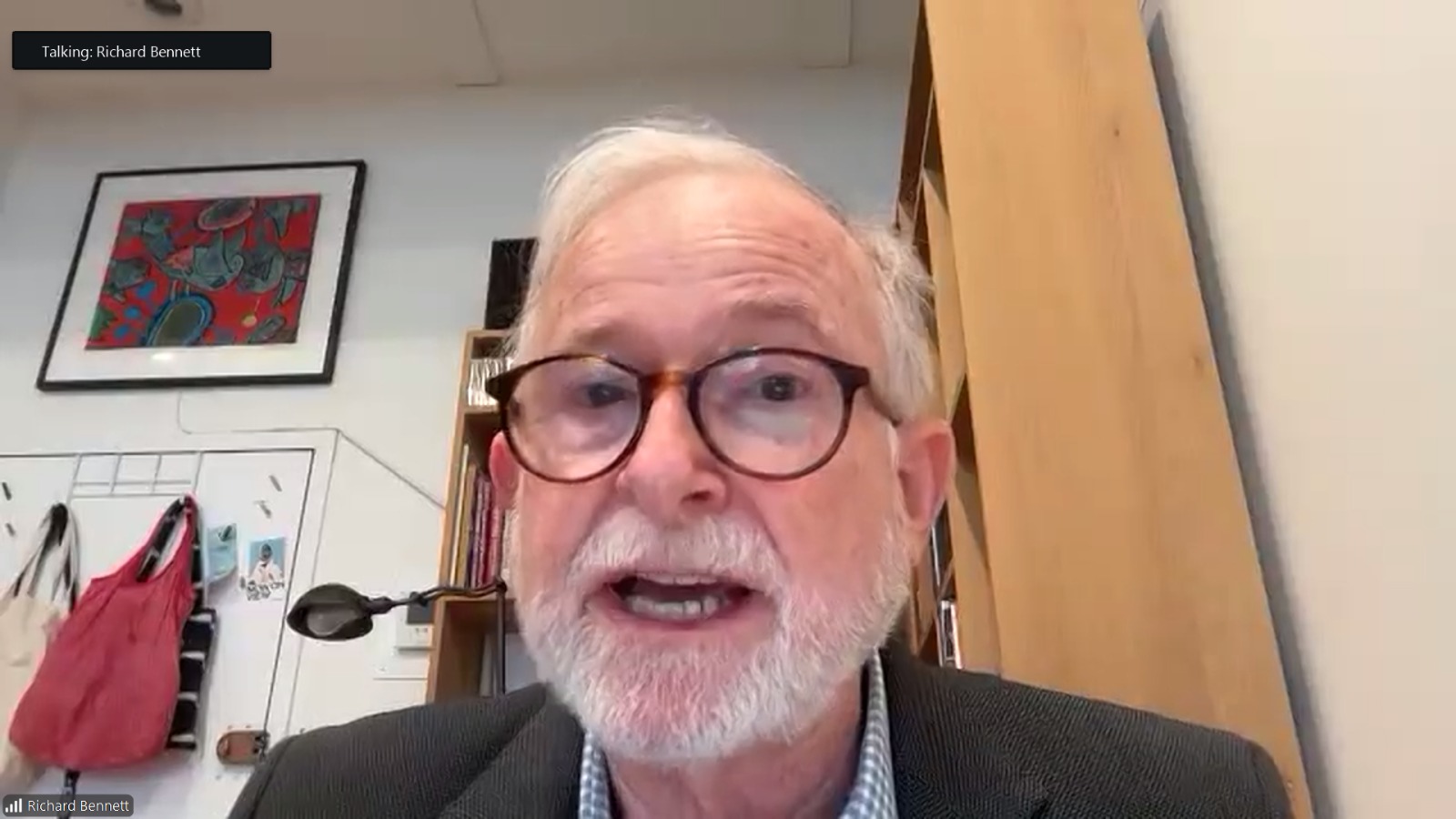
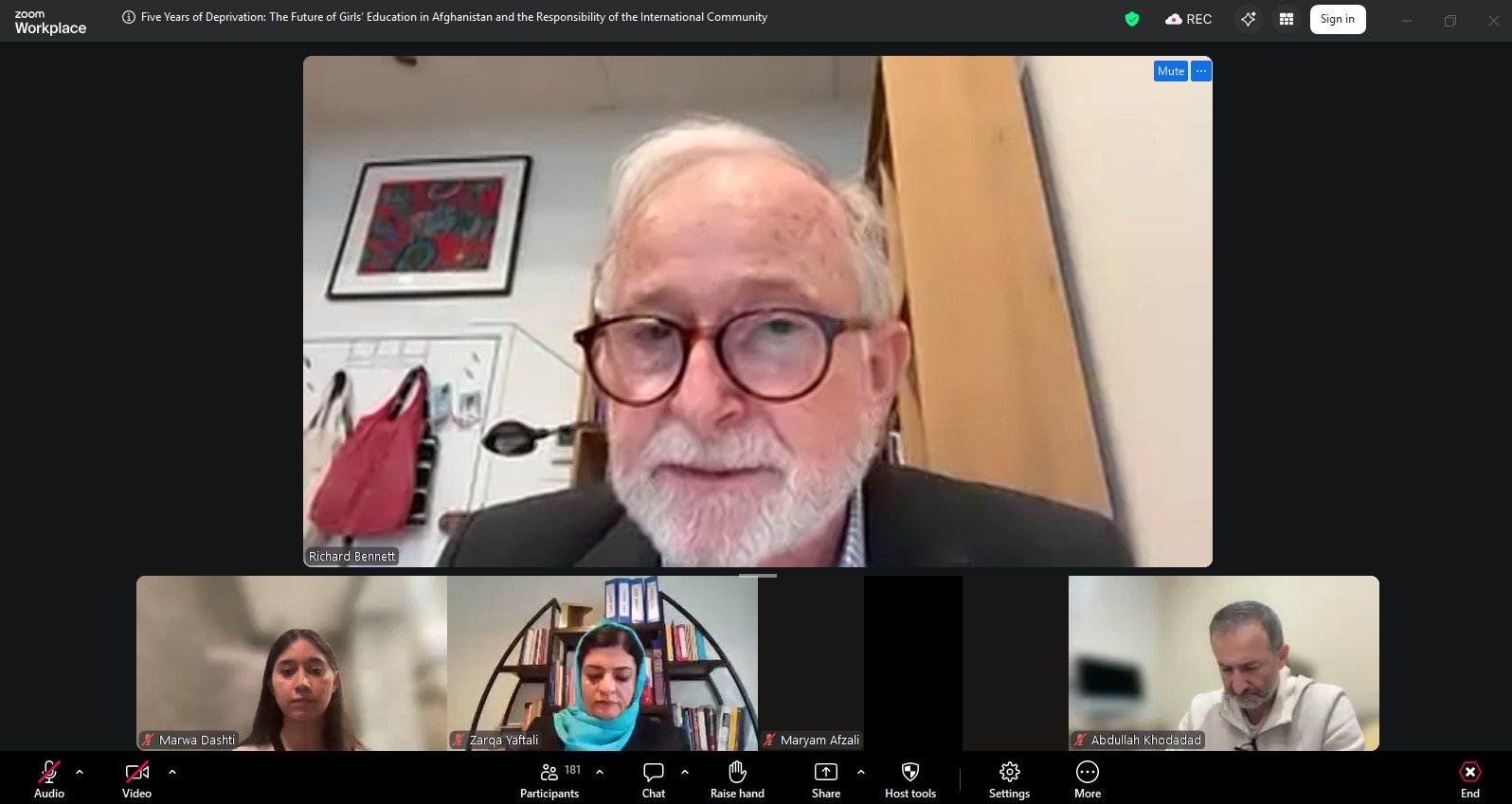
Mr. Richard Bennett, the UN Special Rapporteur on the situation of human rights in Afghanistan, echoed the gravity of the situation. He stated that the Taliban’s systematic violations against women and girls may amount to crimes against humanity, particularly persecution on the grounds of gender-a charge already reflected in International Criminal Court arrest warrants for two top Taliban leaders.
“Denying education today increases poverty, weakens economic development, entrenches gender inequality, and isolates the country, making recovery more difficult,” Bennett said. He praised the courage of girls who continue their studies through online platforms or by teaching peers, and stressed that the future of Afghanistan will be determined by the people of Afghanistan themselves, “particularly young women and men, whose perseverance and commitment to justice will shape the nation’s path forward.”
The Student Perspective: “Losing Our Future”
Ms. Parnian Setayesh (a pseudonym), a student from Kabul School, delivered a moving testimony:
“For me, and for so many others, this is not just about missing school-it is about losing our future. Without education, our choices become limited, our voices grow weaker, and our risks grow greater. Many girls are forced into early marriages, many struggle with anxiety and depression, and all of us carry the heavy burden of not knowing what tomorrow will look like.”
She concluded with a powerful reminder: “When girls are excluded, Afghanistan loses its potential. A country cannot rise when half of its population is held back.”
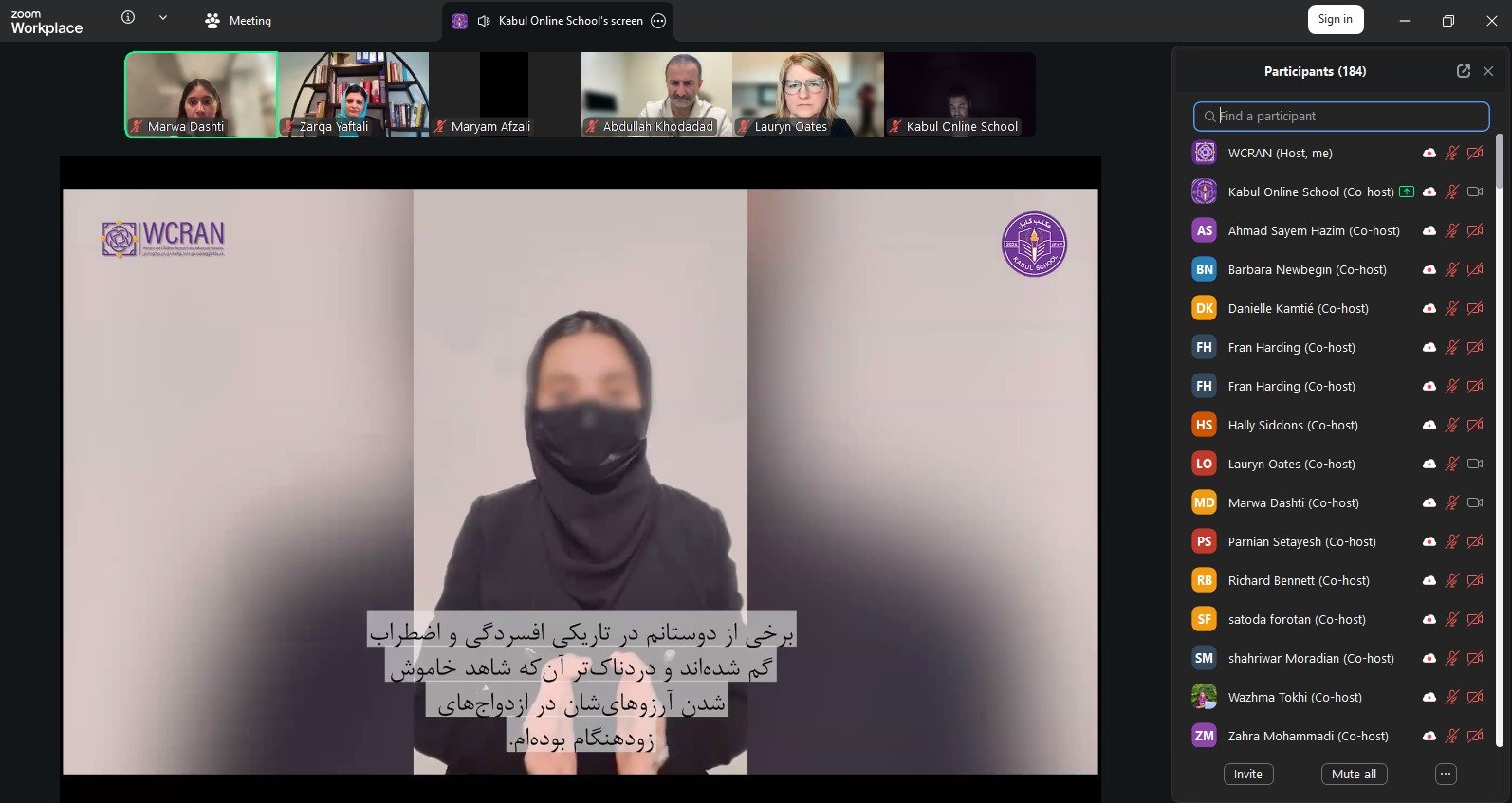
A video message from another Kabul Online School student added: “Now, millions of other students and I, burdened by a sense of aimlessness and sorrow, witness each day the fading of a future for which we once struggled.”
Alternative Education and Resilience
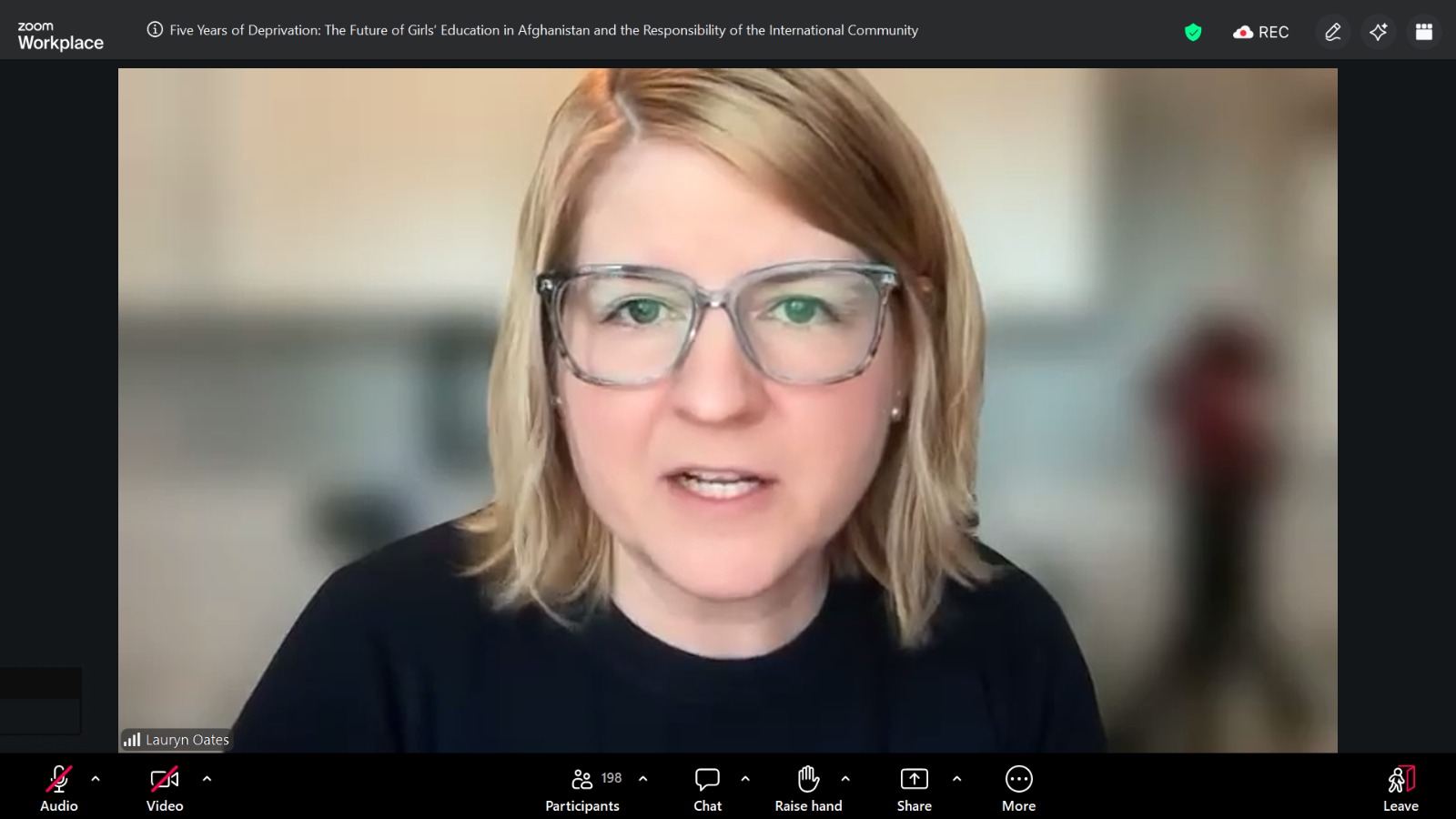
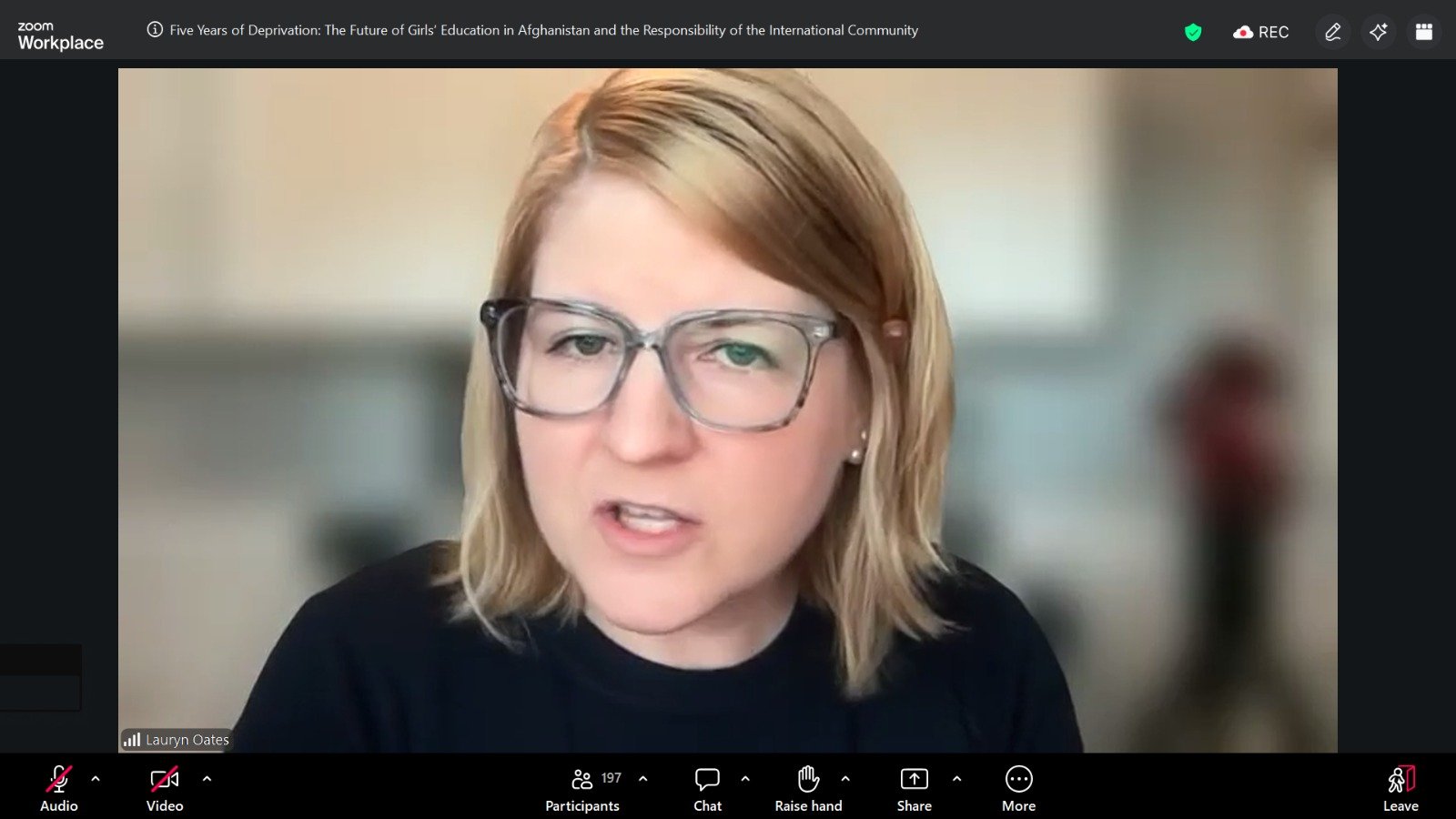
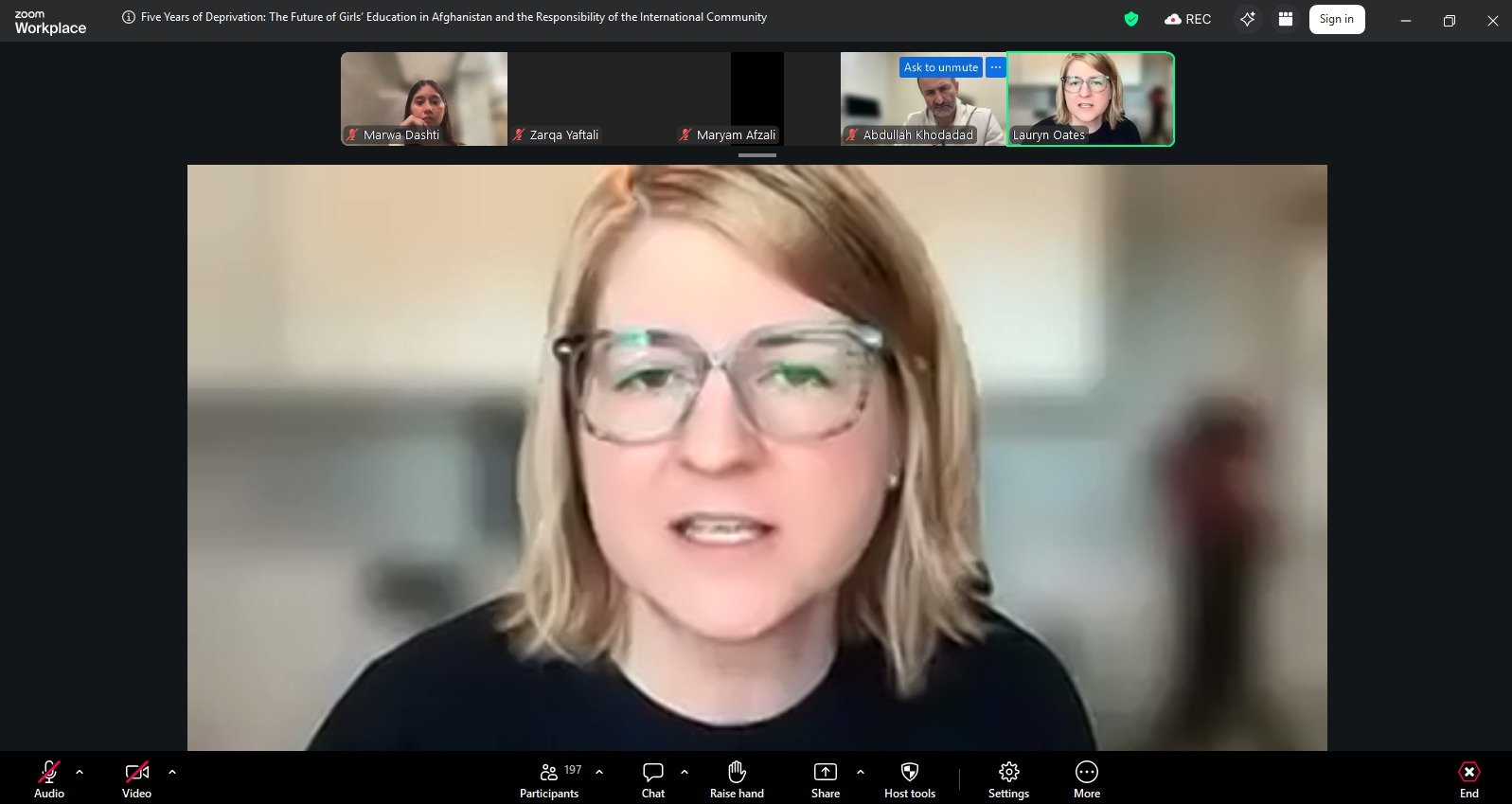
Dr. Lauren Oates, founder of Rights to Learn Afghanistan, highlighted the emergence of an alternative education sector. Women and girls in Afghanistan are pursuing learning through online platforms, diaspora‑led programs, and cross‑border initiatives. Hundreds of organizations now provide secondary, tertiary, vocational, and continuing education.
“Every day a girl is denied education represents a day of injustice,” Oates said. “Supporting these emerging educational initiatives is essential to preserve knowledge, skills, and institutional capacity, providing a foundation for a flexible, innovative, and resilient education system.”
Calls to Action
Throughout the webinar, speakers united around several urgent demands:
- Formally recognize gender apartheid as a crime against humanity under international law.
- Expand access to education through scholarships, educational programs, and cross‑border learning initiatives.
- Support alternative education models, especially online platforms that reach girls inside Afghanistan.
- Provide immediate mental health support for girls experiencing isolation and psychological distress.
- Ensure long‑term, flexible funding for organizations led by women in Afghanistan and education initiatives.
- Treat civil society networks as genuine partners in decision‑making and implementation.
- Maintain sustained international pressure on the Taliban and hold perpetrators accountable.
The Path Forward
Zahra Haqparast, a human rights activist from Afghanistan and former Taliban detainee, summarized the stakes: “Five years of bans on girls’ education have stolen not only schooling but also futures, identities, and opportunities.” She called on the international community to act before another generation is lost.
The webinar closed with a second video from a Kabul Online School student, whose words capture both the pain and the perseverance of girls in Afghanistan:
“I hope that one day the sound of the school bell will ring again, restrictions will be lifted, and we will be able to rise, learn, and play our part in building a brighter future for Afghanistan.”
Read the full open letter and watch the webinar recording at wcran.org.
About WCRAN: The Women and Children Research and Advocacy Network (WCRAN) is a community‑focused initiative dedicated to advancing the rights and well‑being of women and children in Afghanistan and across the diaspora. Through research, advocacy, and direct programming, WCRAN works to amplify marginalized voices and drive meaningful change.
Contact: info@wcran.org | Follow @wcran_org on X/Twitter.
This article is available in Farsi at wcran.org/fa.